
Photo by Prophsee Journals on Unsplash
I’m taking a class called A Journey toward Embodied Freedom. In the first class, we were assigned some practices, aka homework. We were given instructions to implement four practices daily. Some of them we are to do nine times, others, just once. Still another practice was prescribed five times. Yes, daily. One of our instructors, a Buddhist coach named James Flaherty instructs that practices are not conceptual. It would be like going to the gym, listening to the trainers, and not doing the exercises. You aren’t going to see results.
That’s a metaphor that I could really understand, and it made me want to do the practices even more.
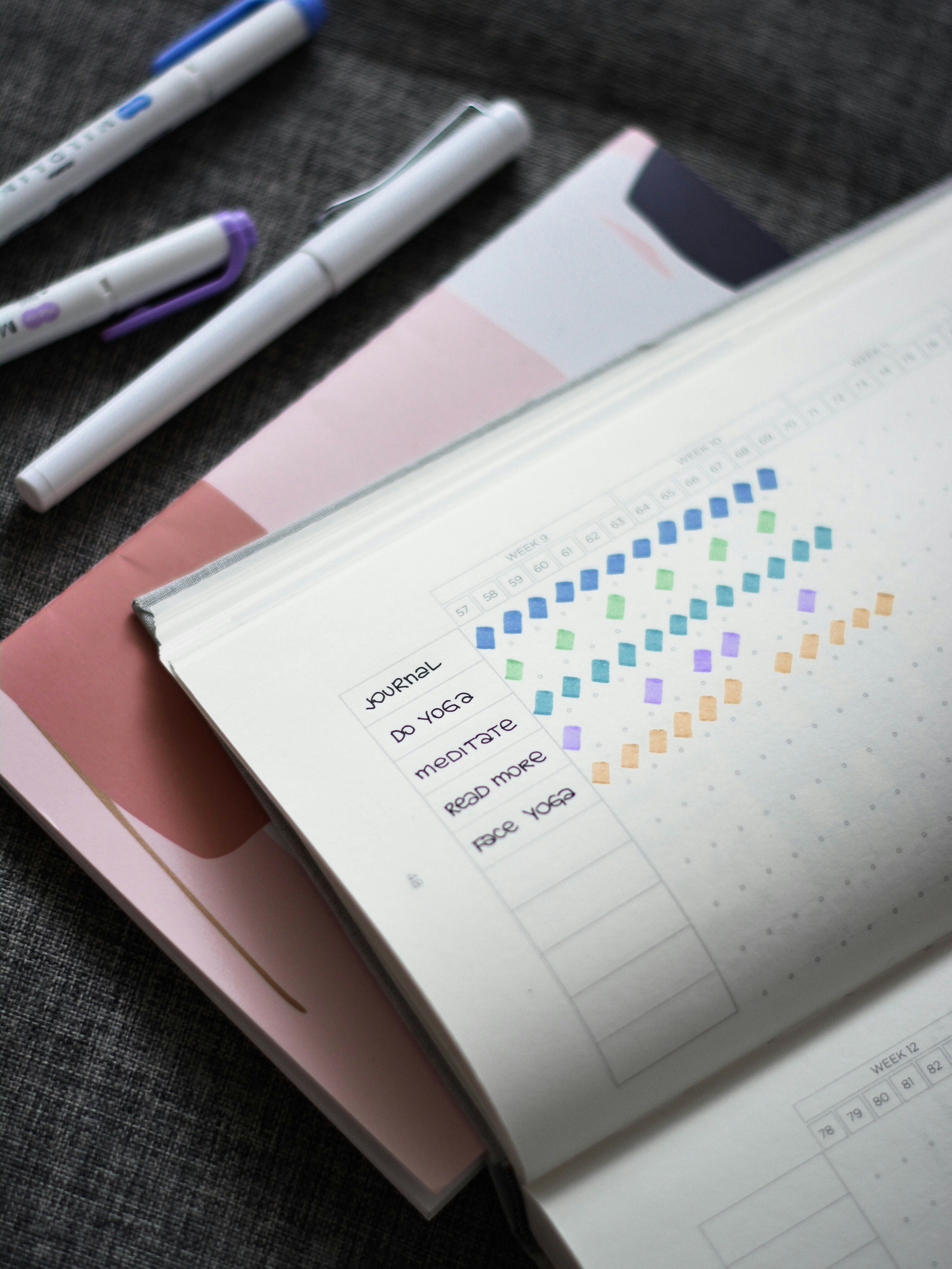
As a good student, I made a habit tracker and started to practice.
A week after class, I met with my Freedom Pod. There are four of us in the group, and we have been given instructions for our meeting, which is held on opposite weeks of our class session. This first week, one of the questions was about these practices.
Someone mentioned their journaling practice and answering the question - I will be free when. Confused, I looked down at the instructions and realized I had totally skipped that.
I didn’t even notice it.
Hmmm.
Why would I not even notice this?
Oh, I know why, I hate journaling.
Hate it.
Why in the world do we need to write down our feelings and thoughts. I already know the answer to the journaling prompt anyway.
I will be free when I’m liberated from ego.
There. Done. Duh.
What else is there to talk about? I know the answer. End of story.
So I decided to sit with this journaling idea. More importantly, my resistance to it. After all, I’ve got a Buddhist telling me the why behind the practices (which I FULLY bought into) and yet, journaling is something I’m not keen on.
I’m not super into gushing out my feelings on paper (for anyone to find and read) or worse, actually feeling those feelings. UGH.
I decide to give it a try. Fine. But I’m not going to expose myself (to myself?) and lay out any deep feelings. I’m just going to answer the prompt.
I will be free when….
I am liberated from ego
I am no longer a prisoner of my wanting
I am capable
I release by fixations
I love freely
I no longer worry about not knowing enough
I embrace the moment
I live in the world
I’m fully awake
I trust God (Universe, Energy, Spirit) and feel supported
I embody oneness
I live without judgment
I love unconditionally
My heart expands
OK, whoa.
I wasn’t expecting any of that.
But I should know better. Repeating questions are powerful. They go deeper and deeper and that is how I approached this exercise.
I will be free when….
I will be free when….
I will be free when….
Looking back, I initially did the exercise because I was supposed to (that Self-Preservation discipline instinct is a strong one for me) and then it transformed from supposed to to need to.
Practices won’t make us perfect. But that isn’t the point of them. It is to bring us to a deeper awareness, understanding and compassion for ourselves and others. This can’t happen without doing the work. Just like you shouldn’t expect physical strength without exercising.
Russ Hudson (my favorite teacher - if you didn’t know this already) says he always gets the question (and he imitates in a nasally voice) “Besides presence, what else am I supposed to do to become more aware?” And he always lets them know, it comes back to Presence. You can’t get present without practice.
Whenever anyone asks me how to become more present, I say, “Start with a 7-minute practice, daily.” (You can access my library here). This gives you the inner muscularity to call on it throughout your day when you need it. Stop expecting changes in your life without doing the practice. It won’t happen. Just like those muscles won’t happen without doing the work.
Because when you combine Sangha (community), Presence (this lived moment), and Essence (your authentic Self), your practices become embodied.
And that is the point of practice. Not perfection.
Embodiment.
LOVE this!!!